Fish

Fried Little Fishes

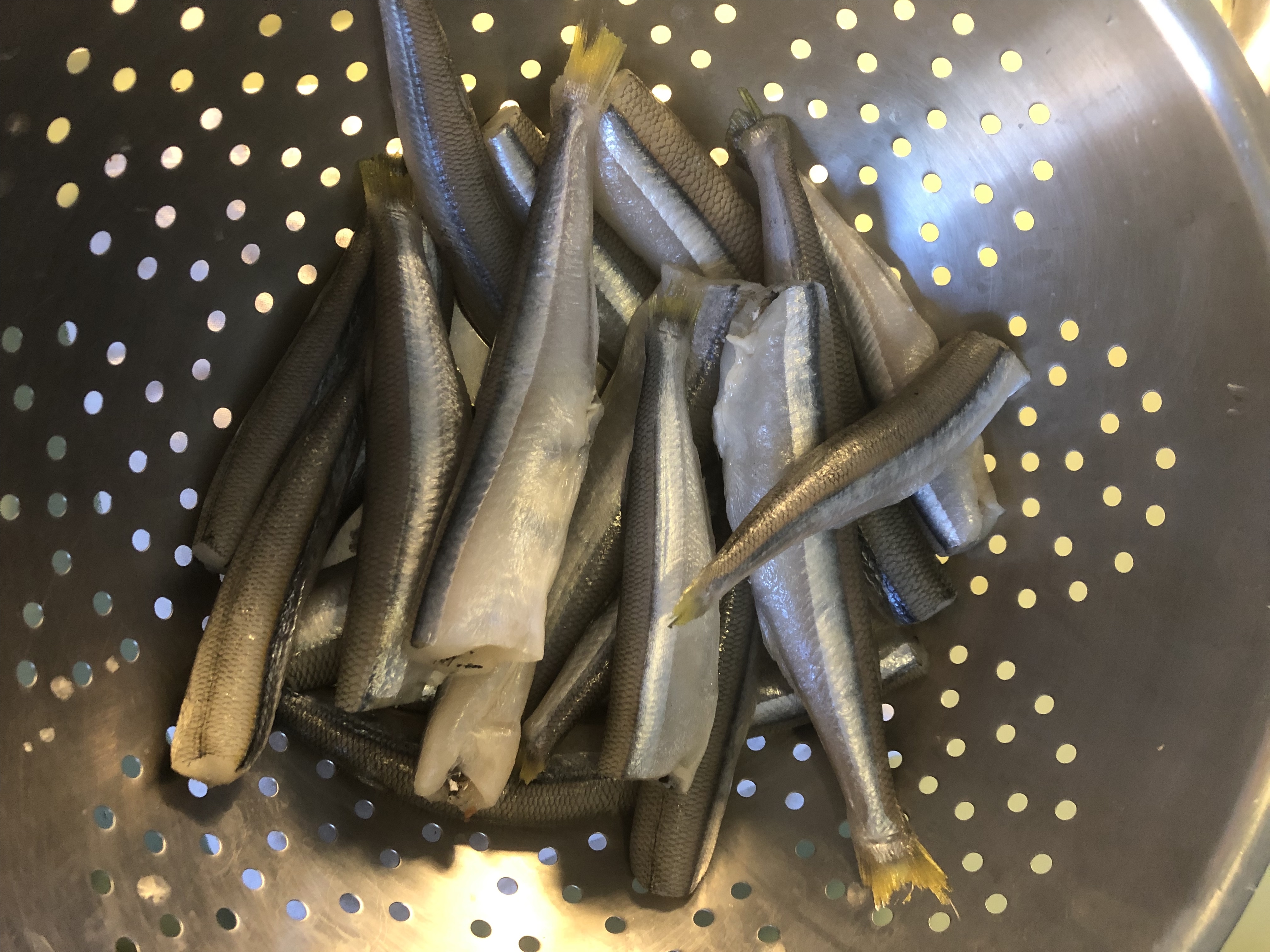
Little Fish, pre-deboning

I don’t know for sure what these are—I get them in a bright blue plastic bag from the frozen fish section of the Chinatown Supermarket of Manhattan on East Broadway. But they remind of the fried hamsi (black sea anchovy, European anchovy, the translations go on and on) I ate in Turkey as an au pair, and the smelts my mom would occasionally buy at Kroger. 

And as it turns out, they are my party trick of the summer. I make them for my friends, for my family, for myself. I eat the leftovers cold for breakfast. My friends say, “Hm, maybe I’ll have one,” skeptically. They’re being polite. And then they eat one and want more. And they say things like “Oh, these actually ARE good.” And I gloat.
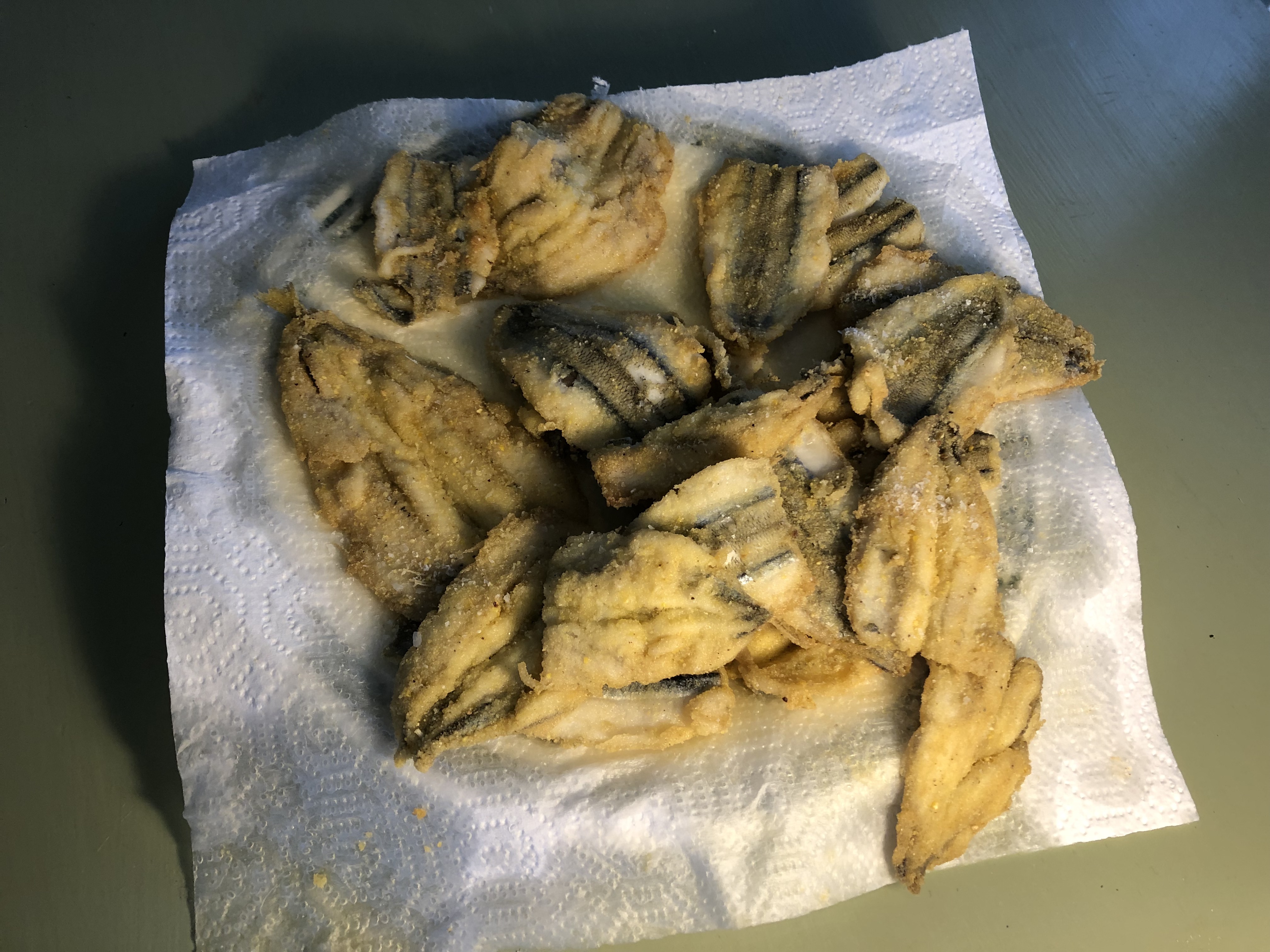
Fried Little Fishes

I serve these as an appetizer because they’re so good on their own with a squeeze of lemon. But they would be great as a meal served with a simple lemony crunchy salad, and bread to soak up the extra salty lemony corn flour crumbs on your plate. 

Fried Little Fishes 

Ingredients:

  • Sunflower Seed Oil
  • Little fish (1-2lbs)
  • 1-2 cups of corn flour (more or less depending on how many fish)
  • Salt
  • Lemon

Debone and gut your little fishes, laying them flat. The fish I buy are cleaned, but they still have the bone. I run the knife from the tail down the fish, and then pull out the backbone. Scrape out any guts or eggs or whatever else you do not want to eat. 

Line a plate with paper towels. 

Pour the oil in a frying pan till it’s about half an inch deep; heat over medium high heat. Pour about a cup of corn flour into a shallow dish. One at a time, coat both sides of the little fish in corn flour. Once the oil is hot, place the fish in the pan, not crowding them. Fry for 2 minutes on the first side; flip. Continue to cook until crispy, about another minute and a half. 

Take the fish out and put them on the paper towel lined plate. Sprinkle with salt. Continue frying the rest of the fish in batches until they’re all cooked, sprinkling with salt when they come out of the pan. 

Serve hot, with lemon wedges, with fried potatoes or in sandwiches with shredded romaine. 
pasta · vegetarian

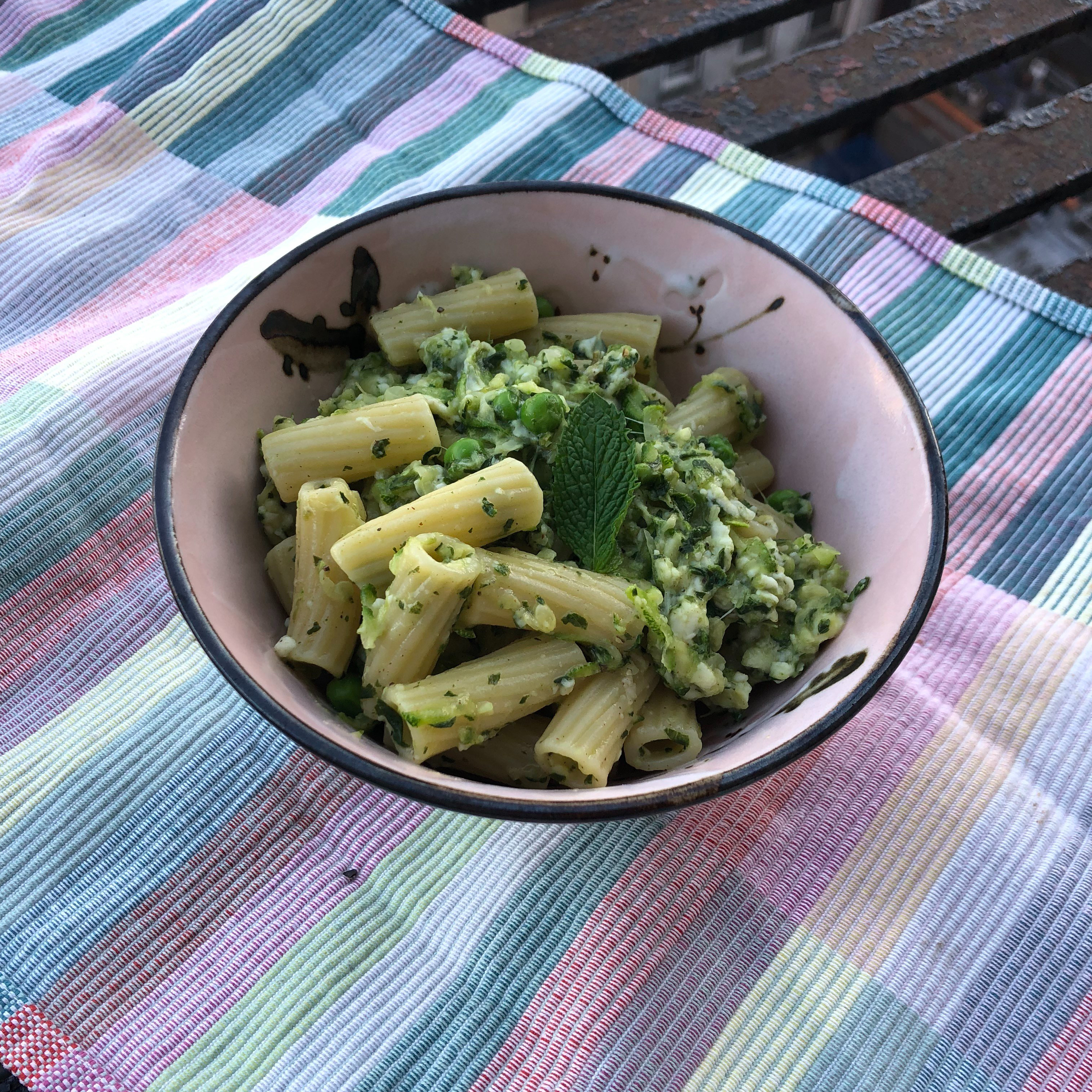
Green Pasta with Brown Butter, Zucchini, and Peas

If this were Italy, we would probably finish our pesto pasta with a drizzle of olive oil and an extra grate of cheese. But this is not Italy—it is the internet of all places, in 2019 (2018 part 2), and so there is only one way to finish a pasta dish. Three tablespoons of brown butter. 

I know I know. Green pasta? With butter???????? Are you kidding me Emma???

No I am not. There are very few things that I actually know about cooking. One is that butter is usually a good addition to a pasta sauce. (Think Marcella Hazan’s three ingredient tomato sauce).

Another thing is that salt is basically as magical as fairy dust, if not more. This magic is extra evident when it comes to sucking the liquid out of vegetables. Which is how you can avoid a watery zucchini situation with this recipe by salting the zucchini and then wringing it out.

I used to add only a pinch to my pasta water, until my friend Caroline was making pasta once and told me that the pasta water should have the same salinity as the sea. 

I don’t know if that’s true but it sounded right. 

This pasta is everything I love about a pesto pasta, plus cheese, plus mint, plus refreshing peas and zucchini. You forget the zucchini is there, until it says ohhhh helloooooo there cutie pie and reminds you. The mozzarella melts just enough but not too much. You can use half the amount of pasta if you want the vegetables to be heavier, or the full amount if you want them to really just serve as an accompaniment. I’ll eat it both ways—any way—any time of day, any day of the week. No nuts in case that’s an issue. You could add them, but I think with the crunch of the zucchini, you don’t need it. Eat hot or cold. 

Green Pasta with Brown Butter, Zucchini, and Peas. Serves 4 (at least).

  • 16 oz pasta, depending on what kind of ratio you are going for. I use rigatoni. Cheese tortellini is good too.
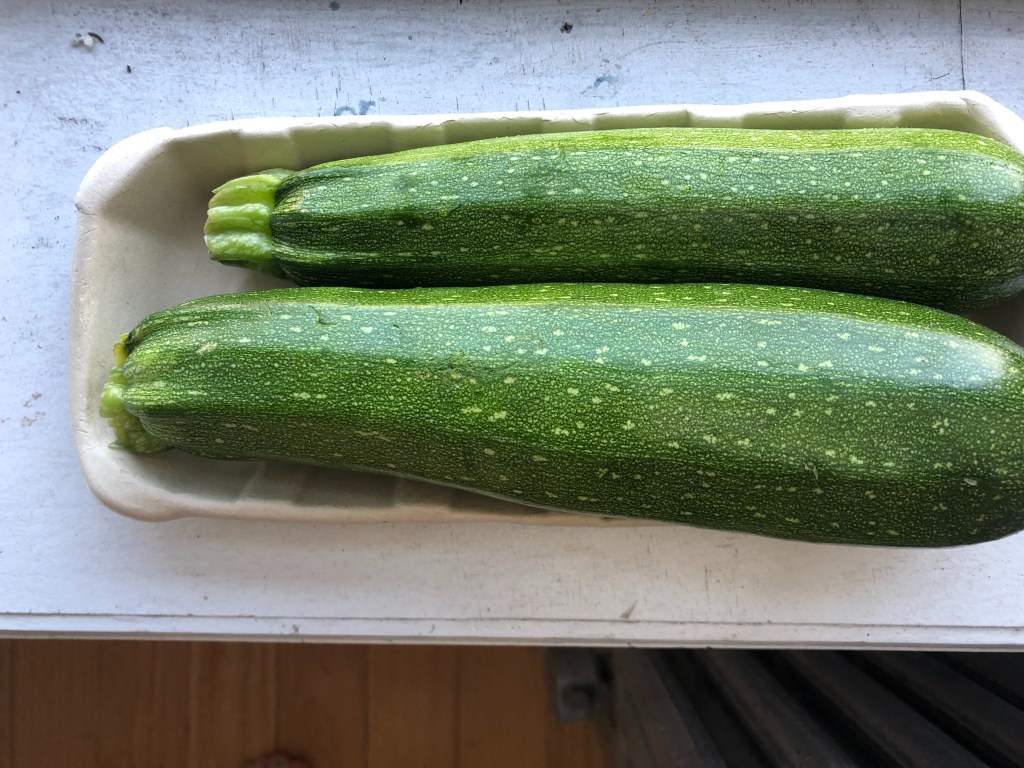
  • 1 large zucchini
  • 8 oz mozzarella shredded
  • 1 cup frozen peas
  • 3 tbsp butter

For the pesto:

  • 1 cup of packed basil
  • 3-4 sprigs of fresh mint
  • 4 garlic cloves
  • Juice and zest of one small lemon
  • 1 tbsp cold water
  • ¼ cup olive oil
  • ¼ cup parmesean 
  • Pinch of salt
  • Black pepper

Grate your zucchini on the large holed side of a box grater, into a bowl with a thin dish towel or cheese cloth draped over it. Sprinkle salt over the zucchini, and let sit while you make the pesto and bring the pasta water to a boil.

Boil a pot of water. Add a lot of salt. Same salinity as the sea. Which sea? Take your pick.

While the zucchini rests, make your pesto. I do this by blending the herbs, garlic, salt, pepper, lemon juice and zest, and a tablespoon of cold water in a glass measuring cup with my immersion blender. Slowly pour in the olive oil until it comes together. Finish with mixing in the cheese. You can use whatever blending mechanism you have.

When your water is boiling, add your pasta, generously salting the water, and set a timer; when five minutes is left, add your peas. 

While the pasta cooks, squeeze as much water out of the zucchini as you can. I do this by gathering the cloth together, with the zucchini in a ball at one end, and wringing out the liquid. Put in a medium bowl, and mix with the shredded mozzarella. 

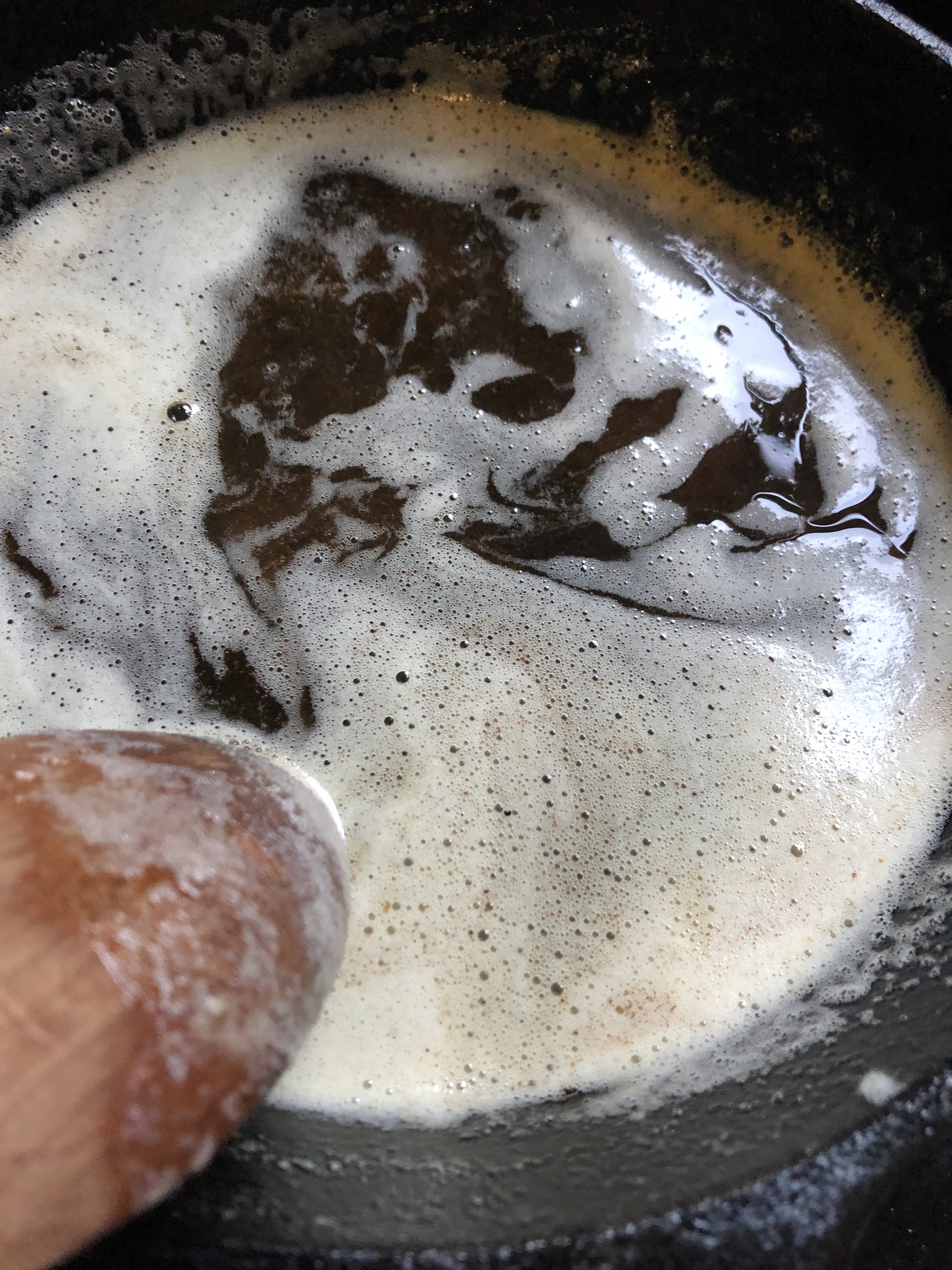
Brown the butter in a small skillet, and set aside. 

When the pasta and peas are cooked to al dente, drain them, reserving 1 cup of water. Pour half of the brown butter into the pot, and return the pasta and peas, adding the pesto, along with the zucchini mozzarella blend, in two parts. Stir. If it seems too dry, add the cooking water you set aside, a tablespoon at a time. Finish with the rest of the brown butter. 

Serve immediately, with whatever spare leaf you may have on hand, a grind of black pepper, and extra pecorino for garnish.